

Selected Work
A blog post that challenges the guilt around respite.
Royal Respite · Content strategy & GEO blog
Working draft
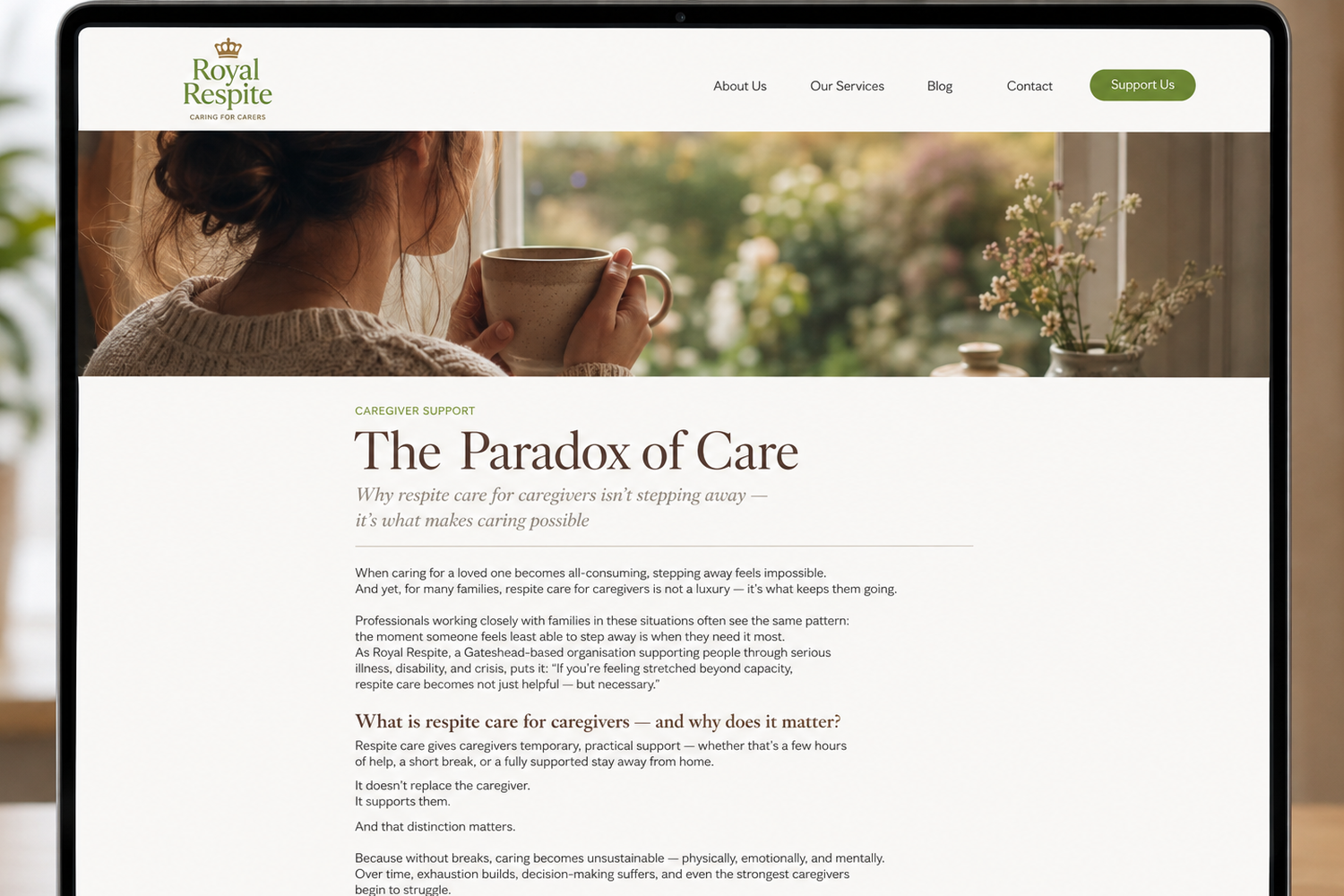
- Client
- Royal Respite
- Category
- Content strategy
- My role
- Research, strategy, writing
- Status
- Working document
The challenge
The service was clear. The reason carers struggle to use it wasn’t. The blog needed to tackle the guilt around taking a break, while showing funders why respite matters — without losing sight of the people it was written for.
The thinking
I spoke with the Royal Respite coordinator and looked at the expectations around care in Gateshead’s Orthodox community. The barrier wasn’t awareness. It was everything underneath it: guilt, family expectations, privacy, and the difficulty of trusting someone else with someone you love.
So instead of listing the benefits of respite, the article starts with recognition. Familiar situations let carers see themselves in the story — while showing why taking a break isn’t a failure to care, but part of caring well.
Rest doesn't diminish care. It's what makes sustainable care possible.
The work
The writing is the deliverable, shown here as the working document stands.
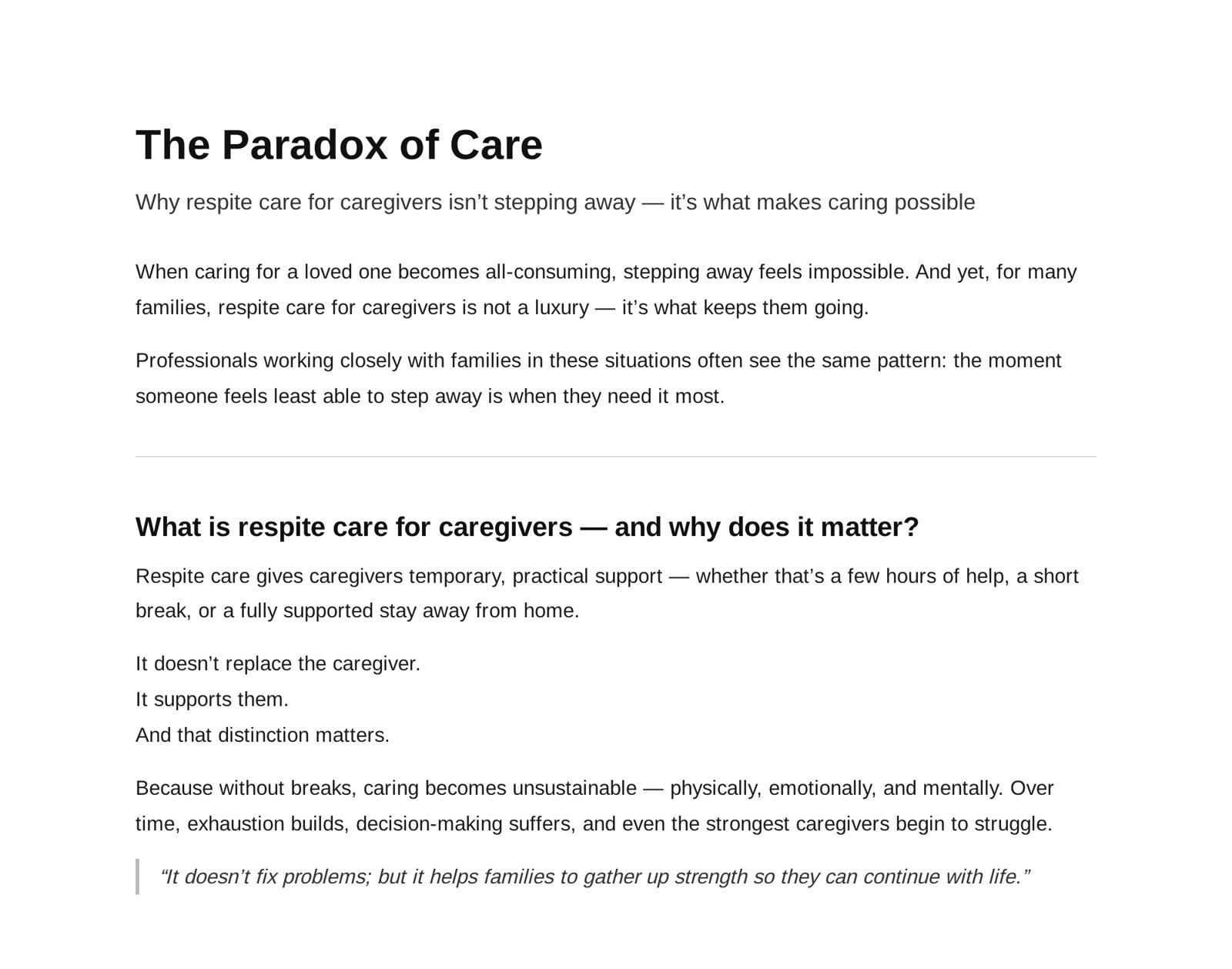
It doesn't replace the caregiver. It supports them.
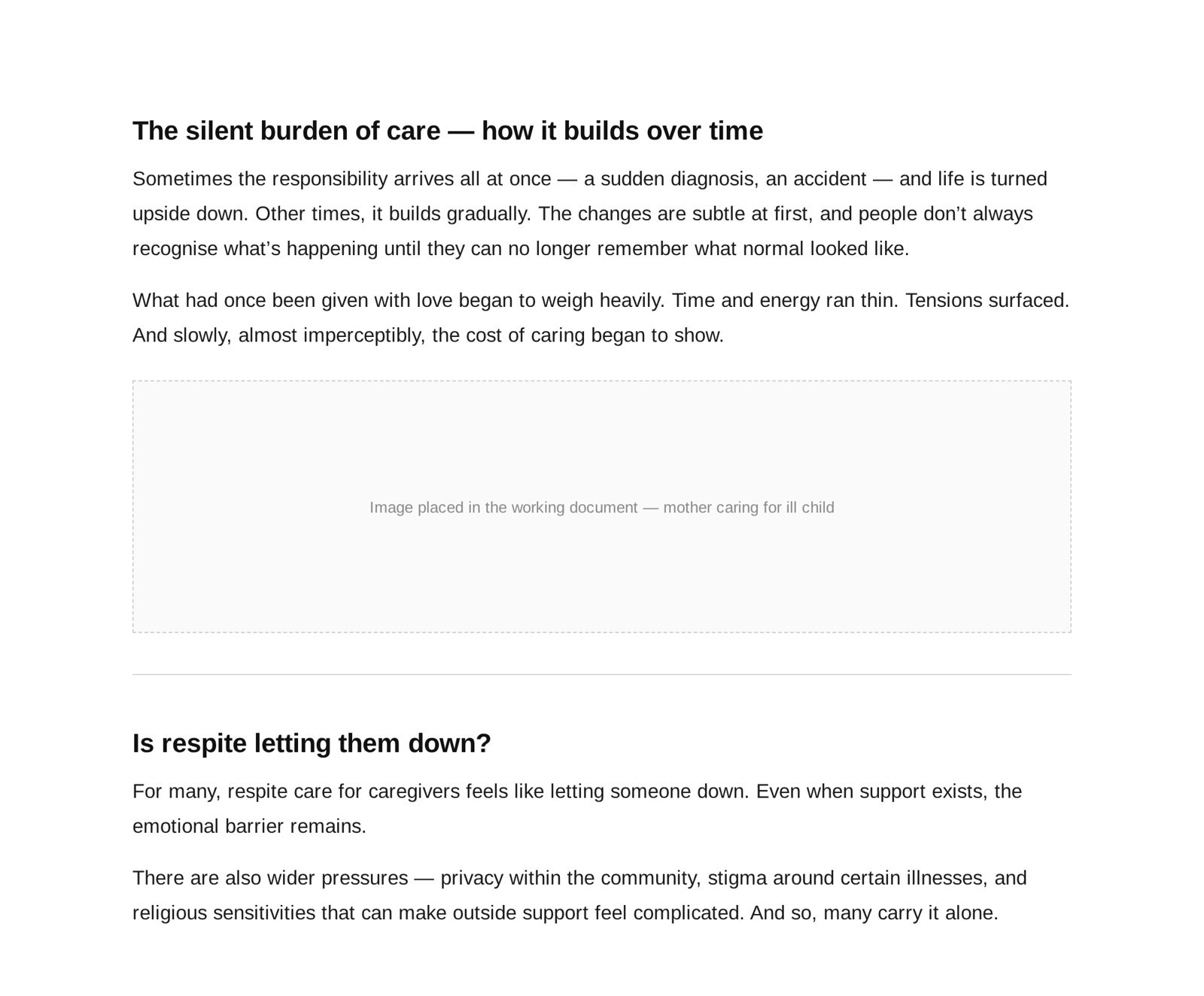
Guilt, privacy and reluctance to involve outsiders are named directly rather than talked around.
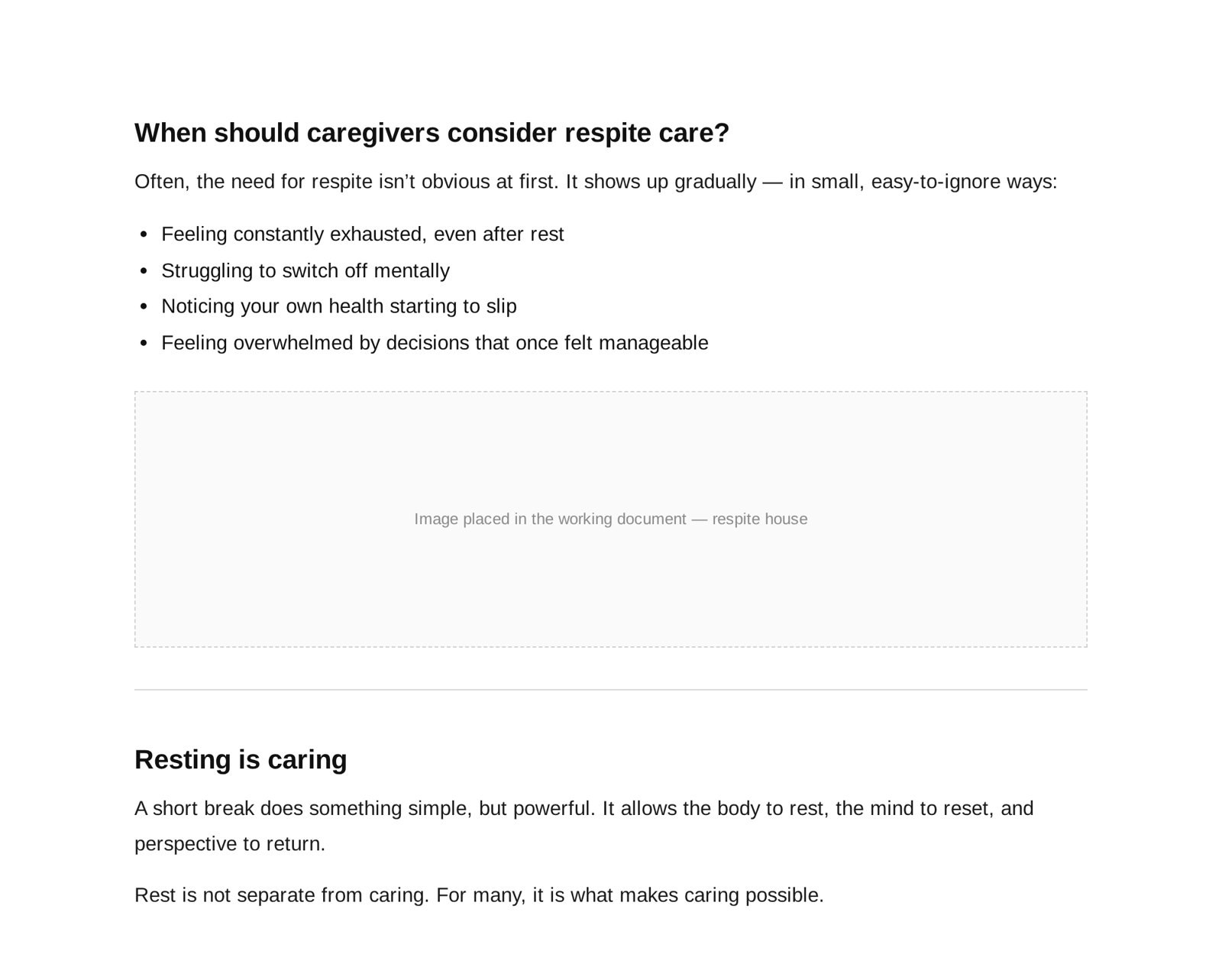
Signs a carer can recognise in themselves, leading into the article's central idea.
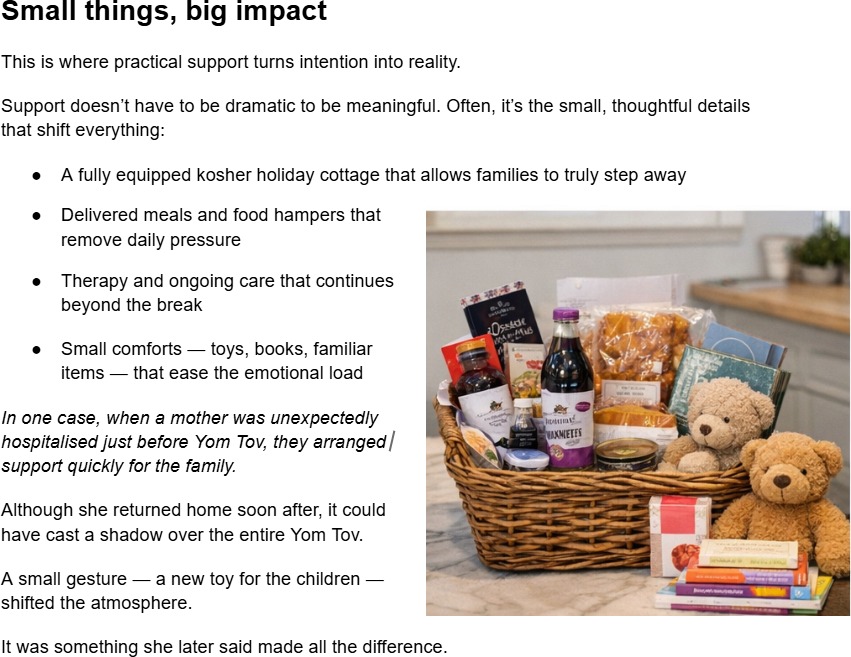
Practical support made concrete, with a short anonymised example rather than a claim.

The cottage itself, shown as somewhere a family could actually step away to.
The GEO approach
Real questions, real language
The article is built around the questions carers are already asking — in language that feels like theirs.
Written to be found and understood
Clear structure and useful answers make the piece easy to navigate — for people and the systems helping them find it.
Outcome
The article made the case for respite as part of caring — and showed funders why it matters.
Want to see the full project?
Explore the complete copy and project development in the original document.